Are you doing what you can to prevent ticks?
Deer ticks are the most common ticks in Pennsylvania. These are the ticks that can transmit the bacteria that causes Lyme disease, anaplasmosis and Borrelia miyamotoi disease. They can also transmit the parasite that causes babesiosis, and Powassan virus.
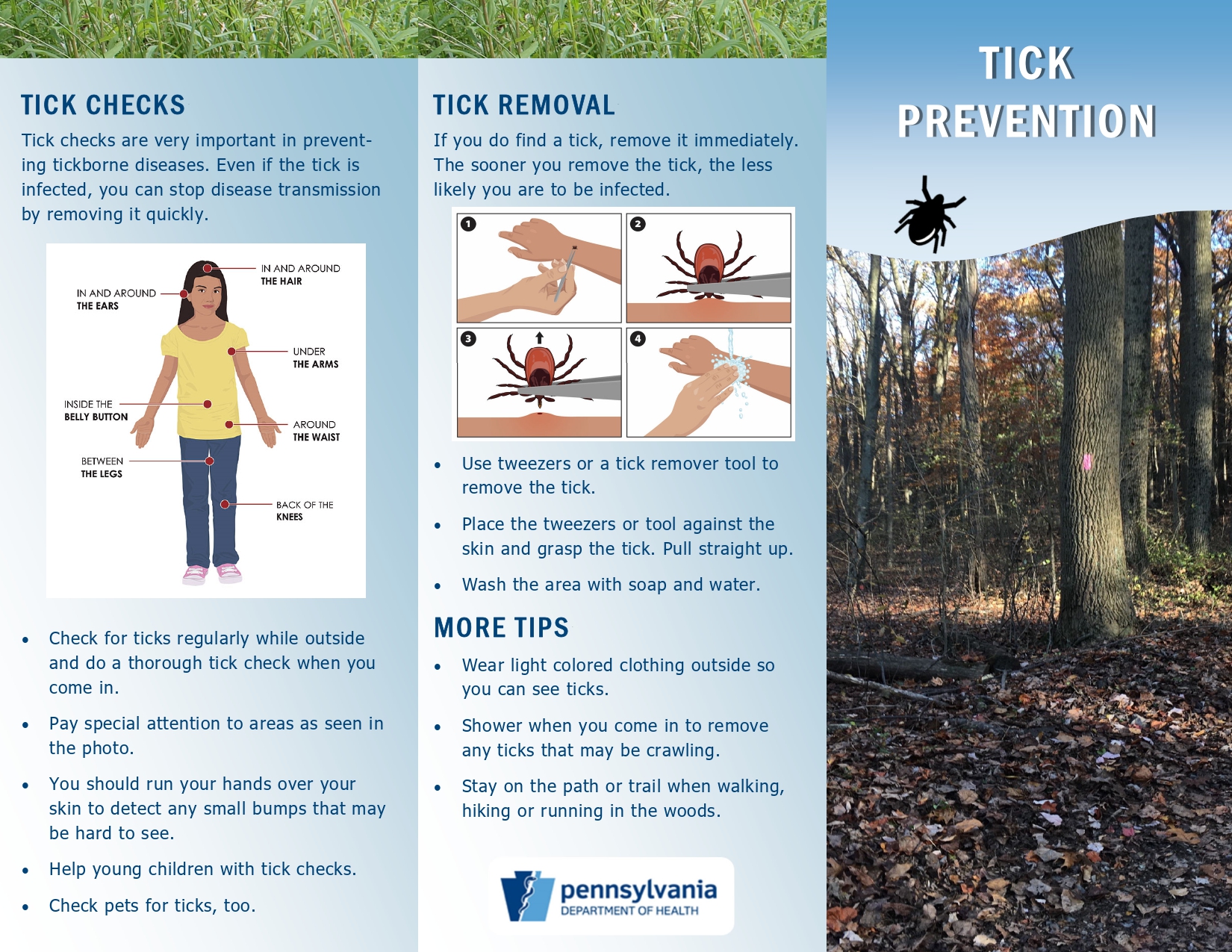
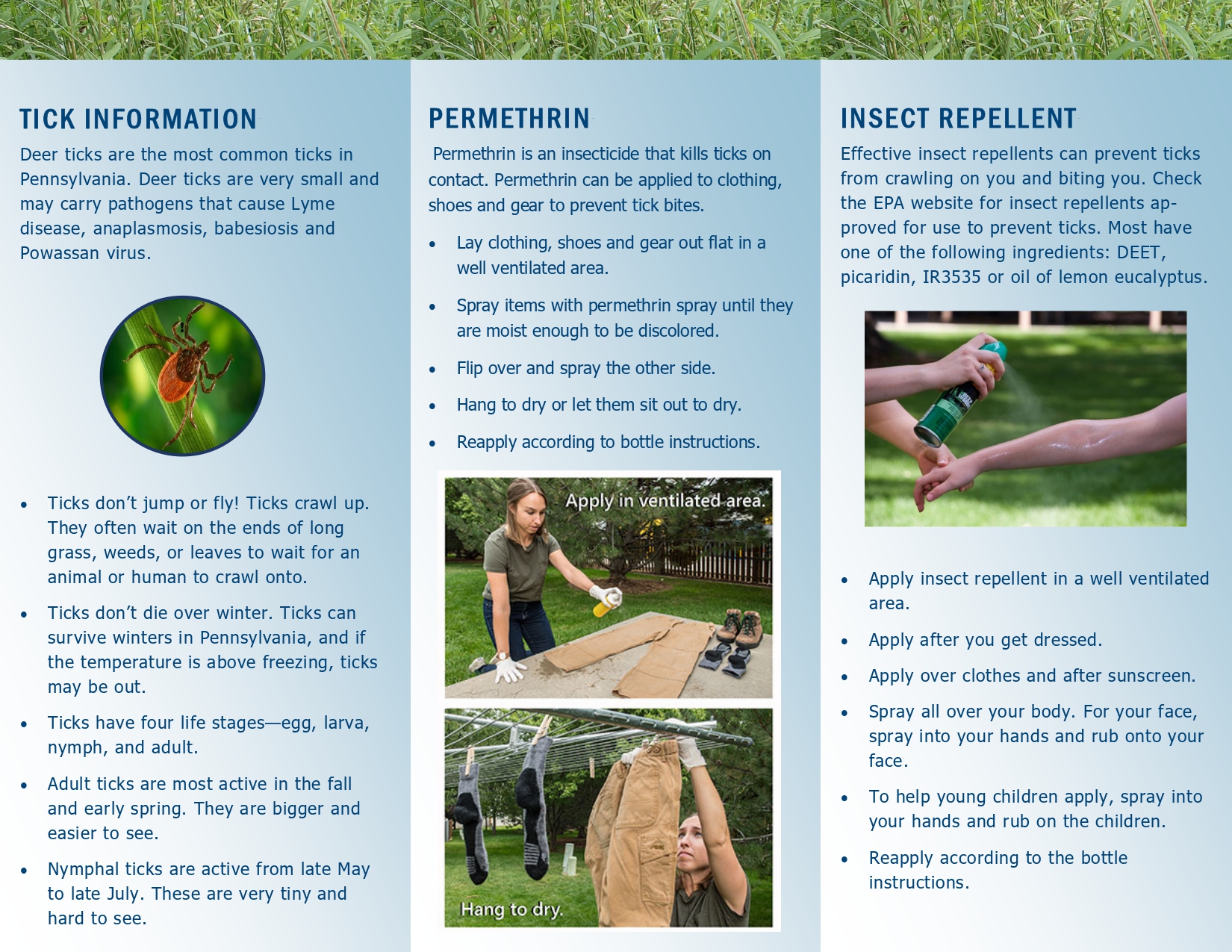
Here are some ways to reduce tick exposure:
- Treat Your Gear: Use Permethrin to treat boots, clothing, and outdoor gear. It kills ticks on contact and lasts through multiple washes
- Wear Smart Clothing: Dress in light-colored clothing so ticks are easy to spot. Tuck your pant legs into your socks and your shirt into your pants.
- Use EPA Repellents: Apply repellents containing DEET, Picaridin, IR3535, or Oil of Lemon Eucalyptus to exposed skin.
- High-Heat Dryer: After being in wooded or grassy areas, immediately put your clothes in a dryer on high heat for 10–15 minutes to kill any hitchhiking ticks.
- Shower and Check: Take a shower within two hours of coming indoors and perform a full-body scan, checking tricky areas like behind your knees, armpits, groin, and scalp
- Create a Barrier: Establish a 3-foot-wide barrier of wood chips or gravel between your lawn and wooded areas to stop ticks from migrating into recreational spaces.
- Reduce Habitat: Keep your grass mowed short, clear leaf litter, and remove dense brush or tall weeds from the edges of your yard.
- Use Tick Control: Apply tick-killing granules or sprays to your lawn during peak tick seasons (spring and fall).
- Daily Checks on Pets: Run a fine-toothed comb or your fingers through your pet’s fur—especially around their neck, ears, and underbelly—every time they come inside. Treat pets with anti-tick medication or use an anti-tick collar.
- Consult a Vet: Speak with your veterinarian about effective, year-round tick preventatives (chews or topicals) for your dogs and cats.
- Avoid feeding Wildlife: Feeding opportunities often bring animals close together and can lead to the spread of disease. Though wildlife diseases do occur naturally, their spread is significantly increased when wildlife is unnaturally concentrated at artificial feed sites. Avoid feeding deer or encouraging them to come into the yard to avoid bringing ticks in.
- “Yard Pets”: Keep chickens, opossums, guinea fowl, or skunks as yard pets- they will eat ticks. Rid yard of any chipmunk, mice, shrew, or groundhog populations as these are known to carry ticks and Lyme disease.
Check yourself, your children, and pets daily after being outside!
Signs and symptoms of tickborne diseases:
Watch for signs and symptoms of tickborne illnesses, including Lyme disease,
like rashes, fever, chills, headache, joint and muscle aches. See a health care
provider if you suspect a tickborne illness, even if you don’t remember being
bitten by a tick.
Tick Removal:
(Information from https://www.ticklab.org/prevention)
When you spot a tick on a person or pet, remove it right away. If the tick has not attached itself to the host, you can simply pick it up and place it in a plastic bag. If the tick is attached, you’ll need to remove it carefully, following the steps listed here.
- Using tweezers or a tick removal tool, grip the tick, getting as close as you can to its head.
- Steadily pull the tick straight up and out. Avoid twisting or squeezing it, which could increase the risk of disease. Do not burn the tick or cover it in substances such as soap or alcohol. It’s best to pull the tick out rather than trying to get it to let go on its own.
- Place the tick in a plastic bag. Saving it will allow you to identify its species and, if needed, have it tested for tick-borne pathogens.
- Clean the bite with an antiseptic such as isopropyl alcohol.
- While some redness at the site is normal, this should subside. Watch for signs of infection. If you develop a rash, tenderness, or pain, see your doctor right away.
Important: Avoid burning the tick or coating it with any substances such as soap, alcohol, petroleum jelly, or acetone. Covering the tick with any substance or applying heat will irritate the tick and place you at greater risk of contracting a tick-borne disease. It may also make it impossible to test the tick for disease.
After you have removed the tick, monitor the area for several weeks. Check for signs of infection including rash or swelling. (Keep an eye out for a bullseye-type rash, which may indicate the presence of Lyme disease.)
Laboratory testing is available through the Tick Research Lab of Pennsylvania. Testing can reveal the presence of tick-borne diseases such as Lyme disease, Anaplasma, and Rocky Mountain spotted fever even before symptoms appear.